The Best Books I Read in 2025
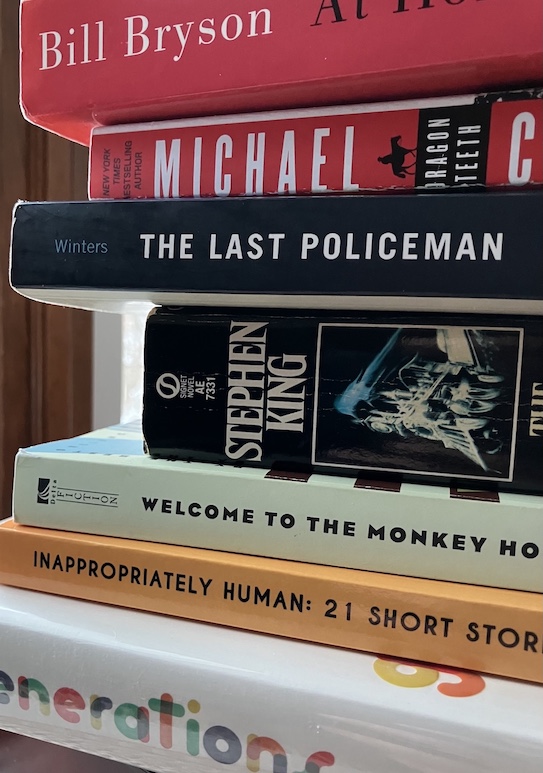
Nonfiction
At Home: A Short History of Private Life
by Bill Bryson
My cousin ruined my reading plans this year by recommending Bill Bryson's At Home. The book was so enjoyable it sent me on an unexpected detour into several others from Bryson.
In At Home, Bryson discusses his own home in England, a former rectory built in 1851. Chapters are framed around different rooms of his house and quickly branch out to all sorts of related historical stories. He discusses the ancient settlement of Skara Brae—which was uncovered by a storm in 1850—as well as monumental structures like Fonthill Abbey and its ever-crumbling tower:
In his obsession to get the project completed Beckford kept up to five hundred men working round the clock, but things constantly went wrong. Fonthill's tower, rising to a height of 280 feet, was the tallest ever put on a private house, and it was a nightmare. Rashly, Wyatt used a new kind of rendering call Parker's Roman cement... Unfortunately, his cement had little inherent strength and, if not mixed exactly correctly, tended to fall apart in chunks—as it did now at Fonthill. Appalled, Beckford found his mighty abbey coming to pieces even as it went up. Twice it collapsed during construction. Even when fully erect, it creaked and groaned ominously.
The tower didn't survive and eventually collapsed a third and final time in 1825.
There are all kinds of other intriguing topics like London's Great Exhibition and Crystal Palace, the dinner diary of Reverend James Woodforde, and the mystery of the third spice shaker.
Other Bryson books I'd recommend:
- In a Sunburned Country
Similar to At Home, this is a mix of the personal and historical, blending Bryson's travel diary with Australian history.
- A Short History of Nearly Everything
This book provides historical background for many major scientific discoveries.
- I'm a Stranger Here Myself: Notes on Returning to America After Twenty Years
This is a collection of articles Bryson wrote after moving from England back to the US. These were pretty funny and reminded me of reading Dave Barry articles as a kid.
Generations: The Real Differences Between Gen Z, Millennials, Gen X, Boomers, and Silents—and What They Mean for America's Future
by Jean M. Twenge
I'm a millennial (born 1980–1994), but I don't share the economic pessimism that permeates my generation. It's hard to clearly remember what early adulthood was like for my parents. And I wasn't even around yet to personally know what early adulthood was like for my grandparents. That's what makes a book like Generations a great read.
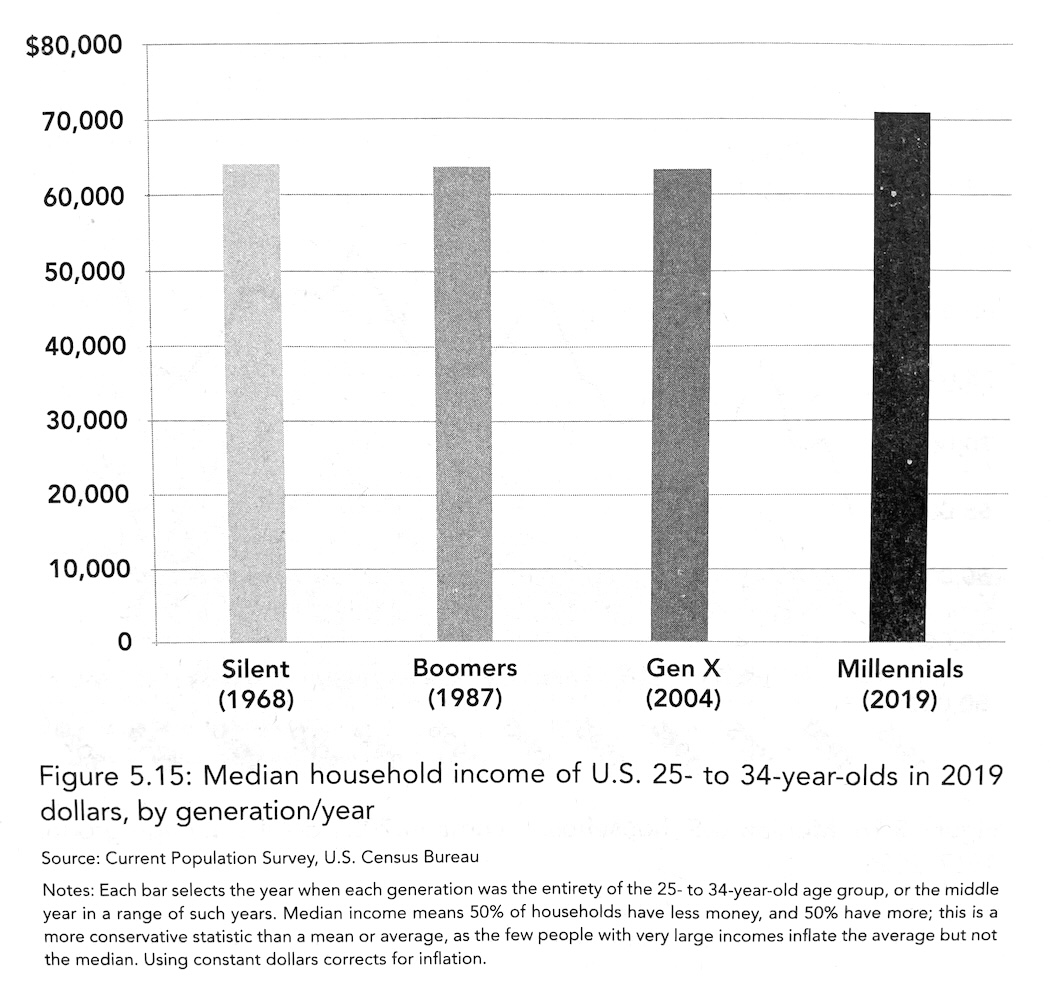
The book provides a lot of interesting comparisons of similar age groups across generations. For example, real median household income for 25- to 34-year-olds is higher for millennials than it was for the previous three generations:
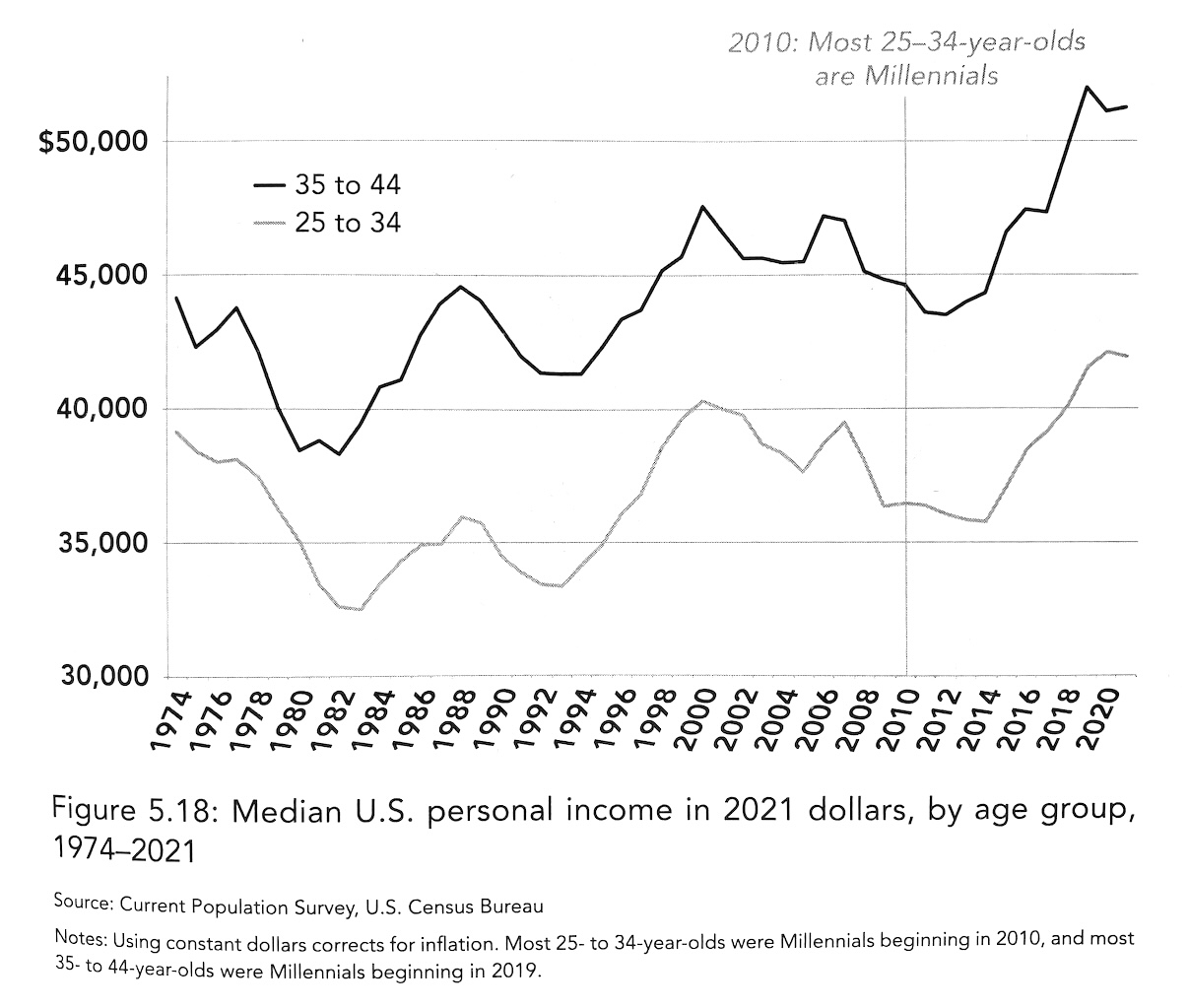
Personal income for those in early adulthood to early middle age has been on an upward trend for decades:
Millennials had fewer 25- to 44-year-olds under the poverty line than Boomers or Gen X. And they only slightly lag behind previous generations at the same age in wealth accumulation and homeownership:
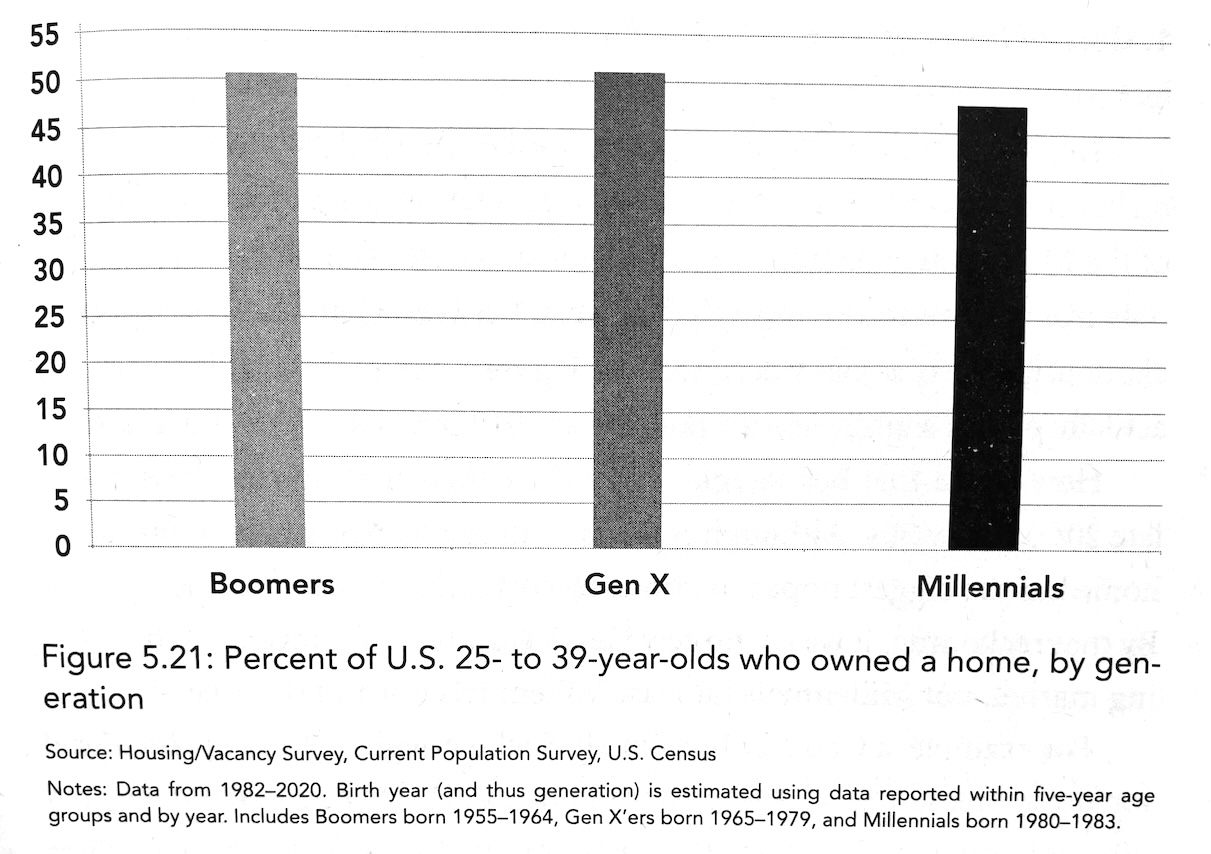
Twenge suggests the lag could be explained by a slower life trajectory (taking longer to grow to adulthood, and longer to age):
More Millennials went to college and graduate school, so they started their careers later than Boomers and Gen X'ers. They are also likely to live longer. With the entire trajectory of adulthood slowed down, it makes sense that Millennials took a few more years to buy houses than previous generations.
In short, Millennials' economic outcomes are even better than they look. These numbers compare Millennials to previous generations at the same age, but the path to adulthood has considerably lengthened with the slow-life strategy. With Millennials taking longer to begin making money, comparing them at the same age may not be accurate or fair. That alone likely explains the small wealth gap with generations found in the Federal Reserve analysis and the small difference in home ownership. For a Boomer, being 27 meant having been in a career for five to nine years; for a Millennial, it can mean just getting started.
The numbers aren't all good. Median income levels have fallen in recent decades for young Americans without a 4-year degree. They have also fallen for men. These and many other topics are explored in Generations, which is full of fascinating data and analysis.
Fiction - Novels
The Dark Tower III: The Waste Lands
by Stephen King
A friend recommended The Dark Tower series earlier this year and I almost gave up on it after the first installment which was pretty bleak. But things turned around and started to get fun in the second book. And by the third, I was hooked. The Waste Lands was a real page-turner.
The series is Stephen King's fantasy/Western epic about Roland Deschain, a gunslinger from another land in search of the Dark Tower. The books are strange and humorous.
Here's my ranking of the main books (I haven't yet read The Little Sisters of Eluria or The Wind Through the Keyhole):
- The Waste Lands
- Wizard and Glass
- The Drawing of the Three
- Wolves of the Calla
- The Dark Tower
- Song of Susannah
- The Gunslinger
The Last Policeman
by Ben H. Winters
The Last Policeman is a sci-fi novel about detective Henry Palace, who is investigating a suspicious death while the rest of the world braces for a massive asteroid impact that will occur in a few short months. With the asteroid looming, many people are taking early retirement, pursuing their bucket lists, experimenting with drugs, or committing suicide. But Palace is devoted to his detective work, sticking to the investigation even when it seems that hardly anyone cares anymore.
This was a fun read and I'm looking forward to checking out the other books in the trilogy.
Dragon Teeth
by Michael Crichton
Dragon Teeth is a historical fiction novel about paleontologists Othniel Charles Marsh and Edward Drinker Cope and their travels to the western territories of the US in the late 1800s in search of dinosaur bones.
I had never heard of Marsh and Cope, so I read the novel thinking that their intense competition was entirely made up, until I reached the author's note at the end. But they were professors who really did have a bitter rivalry. Here's an excerpt from Bill Bryson's A Short History of Nearly Everything where he describes the real Marsh and Cope:
It also marked the start of a war between the two that became increasingly bitter, underhand, and often ridiculous. They sometimes stooped to one team's diggers throwing rocks at the other team's. Cope was caught at one point jimmying open crates that belonged to Marsh. They insulted each other in print and each poured scorn on the other's results. Seldom—perhaps never—has science been driven forward more swiftly and successfully by animosity. Over the next several years the two men between them increased the number of known dinosaur species in America from 9 to almost 150. Nearly every dinosaur that the average person can name—stegosaurus, brontosaurus, diplodocus, triceratops—was found by one or the other of them.
Fiction - Short Stories
"Harrison Burgeron"
by Kurt Vonnegut
In "Harrison Burgeron", it's the year 2081 and everyone has been made equal due to new constitutional amendments that require handicapping anyone who excels at anything: overly-intelligent people must wear earpieces that blare loud noises at random intervals, beautiful people must wear hideous masks, and graceful dancers must be weighed down with heavy bags.
The narrative goes kind of bonkers at the end, with the main characters flying in the air and "neutralizing gravity with love and pure will." But its central idea is still a pretty creepy one that sticks with you.
"The Man Behind the Curtain"
by Andrew Heaton
I'm a fan of Andrew Heaton's The Political Orphanage and Alienating the Audience podcasts. So I picked up Inappropriately Human: 21 Short Stories this year to check out some of his fiction. I ended up enjoying several of the stories in it.
"The Man Behind the Curtain" was my favorite. It's weird, unpredictable, funny, and sad. It's a tale of a boy who steals the family hearse, picks up a hitchhiker, and drives across the country. I also enjoyed "Economics of the Zombie Apocalypse" which has the potential to be expanded into a novel.
- Bryson, Bill (2011). At Home: A Short History of Private Life. New York: Anchor Books, Random House, Inc. pp. 180-183.
- Twenge, Jean M (2023). Generations: The Real Differences Between Gen Z, Millennials, Gen X, Boomers, and Silents—and What They Mean for America's Future. New York: Atria Books. pp. 8, 261, 263, 264-267.
- Bryson, Bill (2003). A Short History of Nearly Everything. New York: Broadway Books, Random House, Inc. p. 93.